
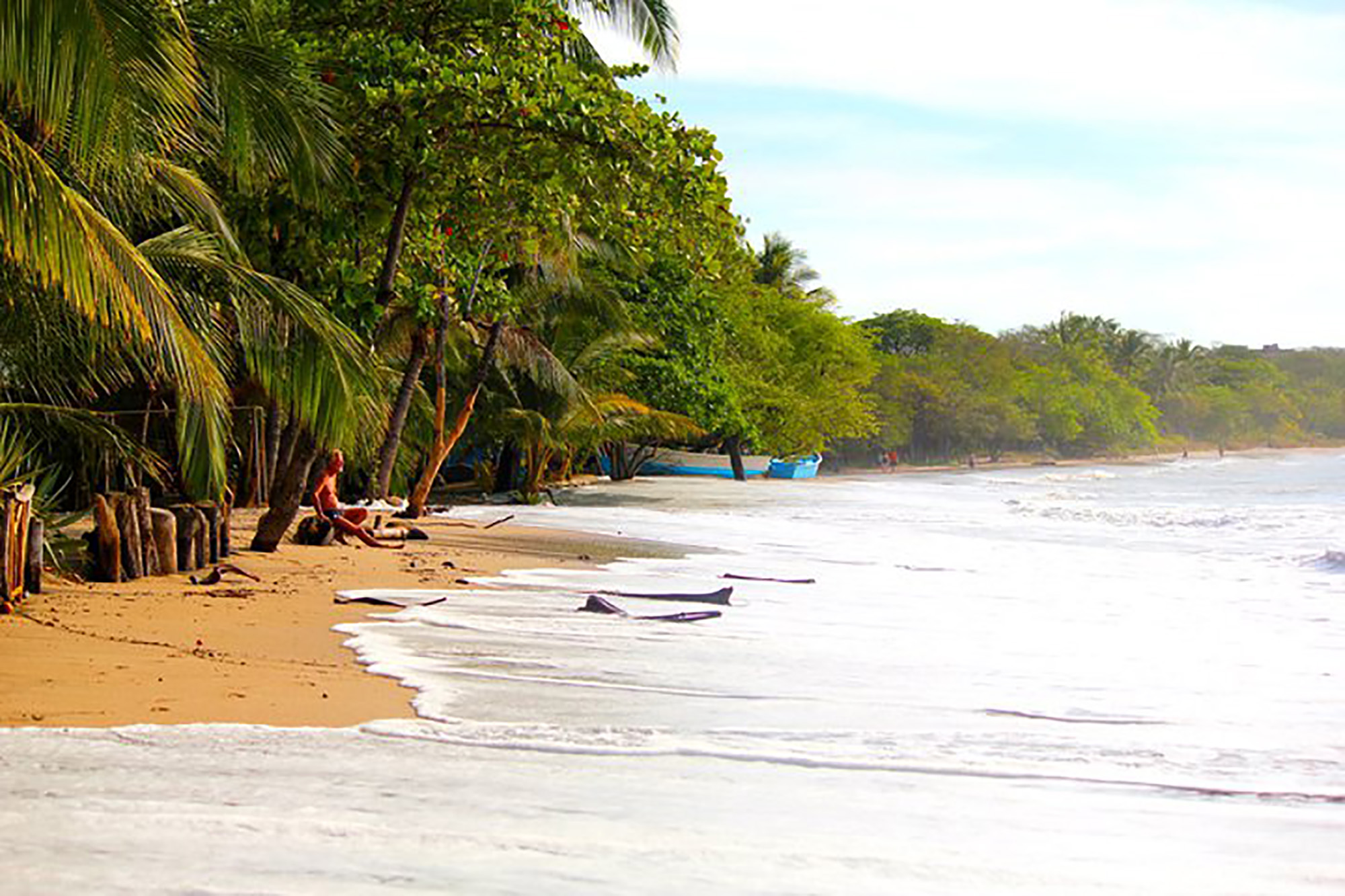
amarindo isn’t “one market.” It’s a set of micro-markets that behave differently depending on walkability, beach proximity, ocean view credibility, and build quality. In 2026, the story is not “prices up or down.” The story is segmentation: trophy assets remain resilient, while average inventory competes harder and negotiates more.
This report focuses on Tamarindo and its immediate luxury orbit—Playa Grande, Playa Avellanas, and the Flamingo corridor—then closes with price projections you can actually underwrite.
The current pricing snapshot (Jan 15 → Feb 15, 2026)
Tamarindo
Market indicators for Tamarindo show an average asking price per square meter around $3,469, with ~205 active listings and an average active list price near $1.05M in the selected period.
Tamarindo–Playa Grande
Playa Grande skews more premium, with average asking around $4,285/m², and ~45 active listings during the same window.
Tamarindo–Playa Avellanas
Avellanas sits in a different value band in this period, with average asking around $2,676/m² and ~46 active listings.
Flamingo (comparison market for “trophy” coastal pricing)
Flamingo is priced as a luxury coastal brand: average asking around $4,999/m² with a noted decrease in the selected range and ~160 active listings.
Luxury interpretation (what these numbers actually mean):
-
Tamarindo’s “core” pricing is strong, but it’s the walk-to-beach + turnkey segment that commands speed and rate.
-
Playa Grande and Flamingo trade at a premium because scarcity and lifestyle positioning matter more than raw square meters.
-
Avellanas can offer value—until you add view, privacy, and top-tier build quality, where it quickly “graduates” into premium pricing.
The big 2026 trend: the market is splitting into “prime” and “everything else”
Across Guanacaste, broker market reporting has highlighted rising inventory and longer absorption patterns—conditions that typically increase buyer leverage, especially outside the top tier.
In practice, you’re seeing two parallel markets:
Prime / Luxury-grade assets (resilient)
These are properties that check the boxes international buyers pay for:
-
walkability or true beachfront adjacency
-
clean architecture and humidity-smart construction
-
low-friction ownership (reliable HOA, proven management)
-
“real” views (not marketing views)
-
strong privacy and noise profile
Standard / mid-tier inventory (negotiation heavy)
-
good on paper, but interchangeable
-
compromised location (road noise, distance, awkward access)
-
dated finishes or high maintenance exposure
-
HOA restrictions or unclear rental allowances
Outcome: premium stays premium; “average” competes harder.
The currency signal buyers underestimate (USD vs CRC)
Costa Rica’s exchange rate moves can change the lived cost of ownership and travel psychology. Central Bank reference-rate reporting showed ~₡495 per USD around late January 2026.
A stronger colón can make some local costs feel “stickier” in USD terms—especially services, labor, and certain day-to-day expenses—while not necessarily softening USD-denominated coastal pricing.
Pricing dynamics by micro-market (how luxury buyers should read it)
Tamarindo: pay for “walkable + turnkey,” not just address
In Tamarindo, premium pricing is most justified when the property is:
-
close enough to make a car optional,
-
built for humidity and coastal wear,
-
positioned for top-tier short-stay demand (or comfortable long-stay remote work).
Luxury buyer note: a condo can outperform a villa if the condo is truly walkable and professionally managed—especially when the villa’s maintenance and staffing overhead are mispriced.
Playa Grande: scarcity and ecology drive the premium
Playa Grande’s price-per-meter premium is logical when you’re buying rarity: beach atmosphere, low-density feel, and a limited supply of truly “prime” product.
Avellanas: value band with “premium spikes”
Avellanas reads as more accessible in this window, but the market can jump sharply for:
-
signature design,
-
privacy,
-
and credible proximity/view positioning.
Flamingo: trophy pricing and buyer selectivity
Flamingo behaves like a luxury brand market; pricing can be dramatic when it’s marina-adjacent, view-driven, or ultra-modern. But even there, buyers are increasingly selective—especially when comparable inventory rises.
Forecast: 12–24 months and 3–5 years (disciplined scenarios)
These are scenario ranges, not promises.
Base case (most probable) — 12 to 24 months
Prime assets (walkable / view / turnkey / elite build):
0% to +5% per year (pricing holds; deals exist mostly via negotiation structure, not big headline drops)
Standard inventory (interchangeable / compromised):
-5% to +2% (often as discounting and incentives rather than visible list-price collapse)
Why: inventory/absorption signals support buyer leverage, but scarcity in true prime segments supports price floors.
3–5 year outlook (2026 → 2029/2031)
Prime: +4% to +7% per year (scarcity + replacement cost + enduring lifestyle demand)
Standard: +1% to +4% per year (if supply normalizes and the property remains competitive)
Downside scenario (if supply grows faster than demand)
Prime: 0% to +4%
Standard: -2% to +2%
Luxury buyer playbook (what to do with this)
If you’re buying Tamarindo luxury in 2026, the edge is not “timing.” It’s selection.
Prioritize:
-
walkability or true beach adjacency
-
humidity-smart construction (ventilation, materials, detailing)
-
verified rental policy (HOA) and proven management options
-
noise and privacy profile (a luxury killer if wrong)
-
water reliability and rainy-season access
Negotiate:
-
on mid-tier inventory where supply is broader
-
on properties that need modernization
-
on listings priced for 2022 psychology, not 2026 reality
Short CTA (premium)
If you tell me your budget bracket ($600k–$1M / $1M–$2M / $2M+) and whether you want ocean view, walk-to-beach, or gated luxury, I’ll translate this into a micro-strategy: target zones + the price/m² range you should accept + where to negotiate hard (Tamarindo, Langosta, Grande, Avellanas, Flamingo/Potrero/Conchal).